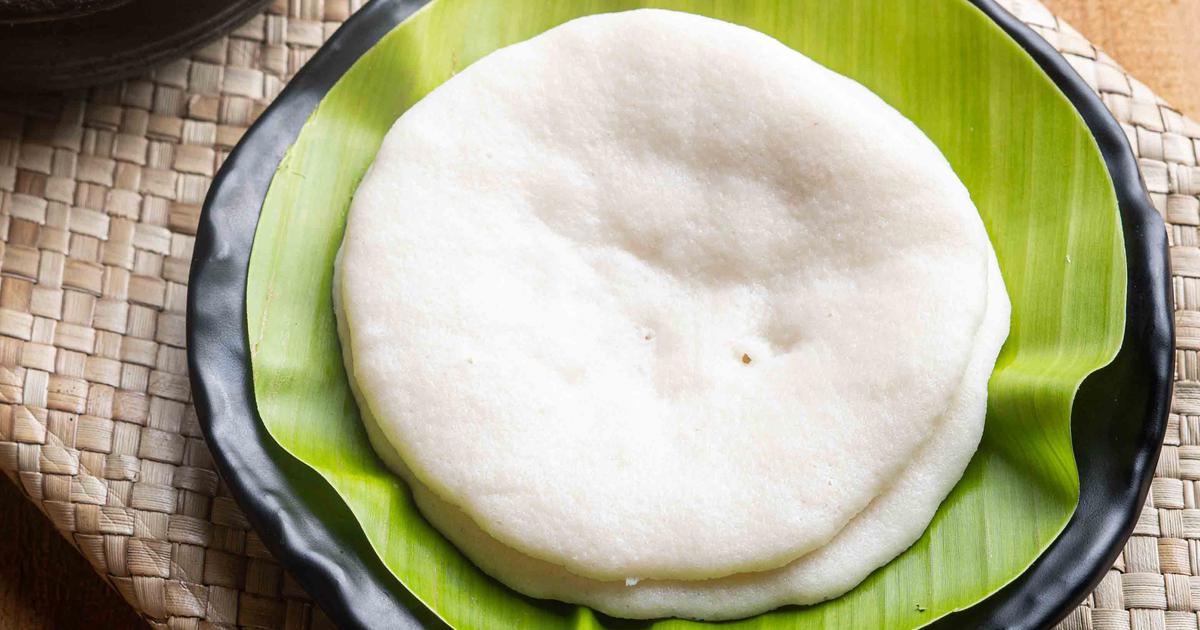
Ramassery Idli
also called King of Idlis
A flat, feathery idli steamed over wet muslin and tamarind-wood fire - a 200-year tradition kept alive by a handful of Mudaliar families.
Ramassery, Palakkad, Kerala
Image: AI generated · Unverified
The Recipe
Yield · ~30 idlisEach axis is scaled against the longest example in the archive.
Ingredients
Batter
- 4 cups idli (parboiled) rice
- 1 cup whole white unpolished urad dal
- 1 tbsp fenugreek seeds
- 1 cup cooked rice (optional, for softness)
- 4 tsp salt
- Wet muslin / cotton cloth for steaming
Method
Wash and soak rice, urad dal and fenugreek separately for 4 hours.
In a wet grinder, grind fenugreek (5 min), then drained urad dal with ~1 cup water (20 min), then optional cooked rice (2 min), then drained rice with 1 cup water (20 min).
Combine the urad and rice batters, add salt, mix thoroughly by hand.
Ferment 6–8 hours in a warm, draft-free spot.
To steam, bring water to a rolling boil in a wide pot; place a strainer or bamboo steamer on top, stretch a wet cotton/muslin cloth across it.
Ladle ~½ cup batter onto the cloth, spread in a circular sweep. Cover with a lid and steam 6–7 minutes, until a knife inserted comes out clean.
Invert the cloth onto a banana leaf and gently peel away to release the flat, disc-shaped idli.
Serve with
Notes
A bamboo steamer with a flat top - or even a perforated metal lid stretched with muslin over a stockpot - substitutes for the traditional stack of unglazed earthen pots. The cloth and the wood-fired heat are what give Ramassery its meshed underside and feathery texture.
Adapted from kannammacooks.com.
Where it's from
Ramassery, Palakkad, Kerala · 10.79°N, 76.65°E