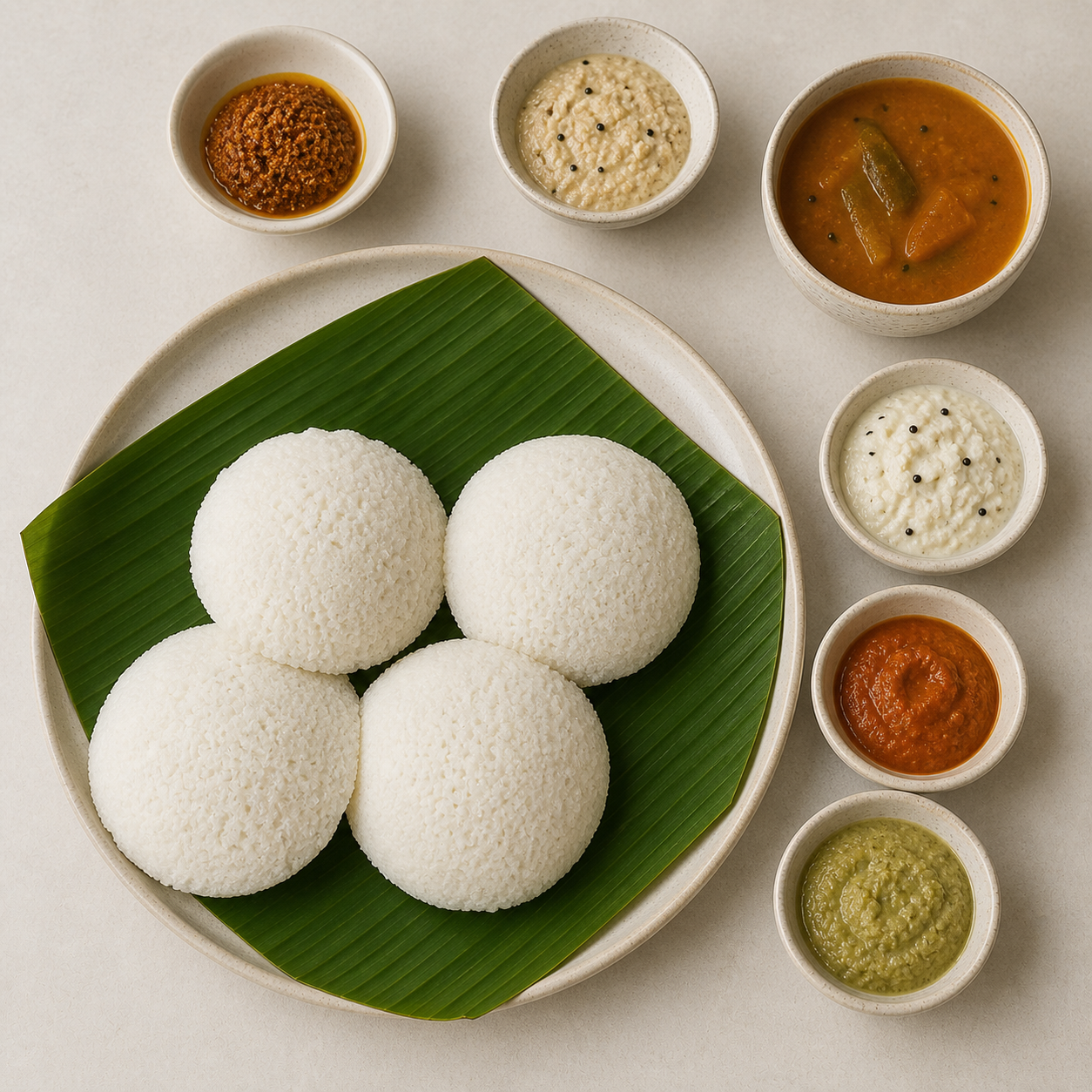
Madurai Idli
also called Madurai-style Idli · Madurai Kadai Idli
A soft, very white Tamil idli served on banana leaf with sambar, podi-and-gingelly-oil, and Madurai's signature brinjal kothsu.
Madurai, Tamil Nadu
Image: AI generated
The Recipe
Yield · ~16 idlis (and 4 servings of kothsu)Each axis is scaled against the longest example in the archive.
Ingredients
Batter
- 4 cups idli rice (parboiled)
- 1 cup whole white urad dal
- 2 tbsp thick poha (aval), for extra softness
- 1 tsp fenugreek seeds
- 1½ tsp salt
- Gingelly (sesame) oil, for greasing
Brinjal kothsu (the signature Madurai pairing)
- 6–8 small purple brinjals, chopped
- 1 onion, finely chopped
- 2 tomatoes, chopped
- 1 tbsp tamarind paste
- 1 tbsp sambar powder
- ¼ tsp turmeric
- 2 tsp gingelly oil
- 1 tsp mustard seeds
- 1 tsp urad dal
- 1 dried red chilli
- Few curry leaves
- Pinch of asafoetida
- Salt to taste
- 2 tbsp coriander, chopped
To serve
- tiffin sambar
- idli milagai podi
- cold-pressed gingelly (sesame) oil
- banana leaf squares
Method
Wash and soak the rice with the poha together for 4–5 hours; soak the urad dal with fenugreek seeds separately for the same time.
Drain and grind the urad-fenugreek to a fluffy, airy paste with cold water; transfer.
Drain and grind the rice-poha to a slightly coarse batter; combine with the urad batter and beat by hand for a minute to incorporate air.
Add salt, cover, and ferment 10–12 hours in a warm spot until the batter has nearly doubled.
Grease idli moulds with gingelly oil; pour the batter ¾-full and steam 10–12 minutes on medium until a toothpick comes out clean.
For the kothsu, splutter mustard, urad dal, dried chilli, curry leaves and asafoetida in gingelly oil. Sauté the onion until soft, add tomato and brinjal with turmeric, salt and sambar powder; cook until the brinjal collapses.
Stir in tamarind paste and a splash of water; simmer 5 minutes to a thick, jammy gravy. Finish with coriander.
To serve, place 2–3 idlis on a banana leaf, ladle hot sambar over a portion, dollop kothsu beside them, and serve a small mound of milagai podi pooled with gingelly oil for dipping.
Serve with
Notes
The defining trio at a Madurai idli kadai is sambar, podi-with-oil, and kothsu — coconut chutney is a fourth, not a substitute. Cold-pressed gingelly oil over the podi is non-negotiable; refined oil tastes flat by comparison.
Adapted from kannammacooks.com.
Where it's from
Madurai, Tamil Nadu · 9.93°N, 78.12°E