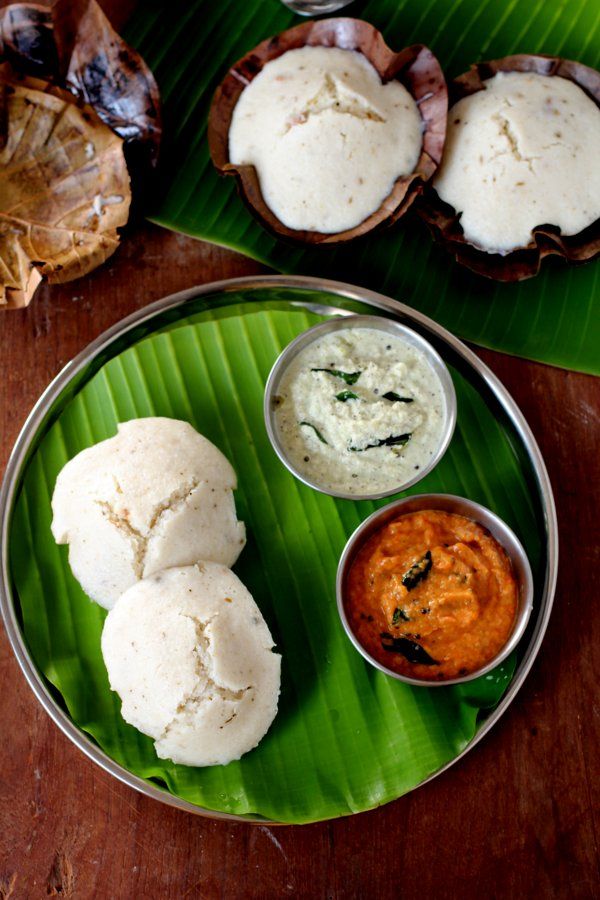
Kanchipuram Idli
also called Kovil Idli · Kanjeevaram Idli
A temple-town idli laced with crushed pepper, cumin and ghee - slow-steamed and slightly dense.
Kanchipuram, Tamil Nadu
Image: Sailu's Food · Editorial
The Recipe
Yield · 12–16 idlisEach axis is scaled against the longest example in the archive.
Ingredients
For the batter
- ½ cup regular raw rice (120 g)
- ½ cup parboiled / idli rice (120 g)
- ½ cup whole urad dal (120 g)
- 15 fenugreek seeds
- 1 tbsp chana dal (soaked separately in ¼ cup hot water for 30 min)
- ¼ tsp dry ginger powder (sukku)
- 1 tsp salt
Tempering (in 1 tbsp ghee or sesame oil)
- ½ tsp black peppercorns, crushed
- ½ tsp cumin seeds, crushed
- 8–10 cashews, chopped
- 7–8 curry leaves, chopped
- ⅛ tsp asafoetida
To steam
- greased moulds or banana-leaf-lined tumblers
- 2.5 cups water in the steamer
Method
Soak rice and urad dal separately for 4–5 hours.
Grind urad dal with ½ cup water until smooth and fluffy. Grind rice coarsely (semolina-like) with ½ cup water.
Combine the batters, cover, and ferment 8–9 hours.
Heat ghee or oil; crackle the crushed pepper and cumin, fry cashews to light golden, then curry leaves; switch off and stir in asafoetida.
Stir the tempering, soaked chana dal, ginger powder and salt into the fermented batter.
Pour into greased moulds (or banana-leaf-lined cups) three-quarters full. Steam 15–20 minutes on medium heat without a whistle.
Rest 1–2 minutes, demould, slice into roundels for serving.
Serve with
Notes
Traditionally steamed in mantharai (bauhinia) leaf cups or hollow bamboo cylinders called kudalai; banana leaves or a small cake pan are standard home substitutes.
Adapted from vegrecipesofindia.com.
Where it's from
Kanchipuram, Tamil Nadu · 12.83°N, 79.70°E